

I learned a new word
I read the dictionary. I thought it was a poem about everything. - Steven Wright

All the nostalgia
I’ve never been too good at sorting out my emotions. I normally consult my friends, but for now I’ll try writing. I think I’m feeling a mix of many nostalgias.
Probably triggered by the class of 2026 graduating this weekend, nostalgia for college. Possibly incited by the little kid that just walked past me in the library wearing a shirt with each layer of the Earth’s inner core labeled, nostalgia for being 7 and knowing such fundamental facts. And how foolish that I’ve forgotten so many of the things I learned at 7.
Surely some of what I am feeling is a kind of anticipatory nostalgia because I am leaving a place I love very much and people who have become family soon.
I also learned a new word that describes a feeling that is certainly contributing:
Saudade. (n. Portuguese) A nostalgia for something that perhaps hasn’t even happened or never will; a vague and constant desire for something that does not and probably cannot exist.
I love discovering a new word, especially when it so aptly applies to me at the time of discovery.
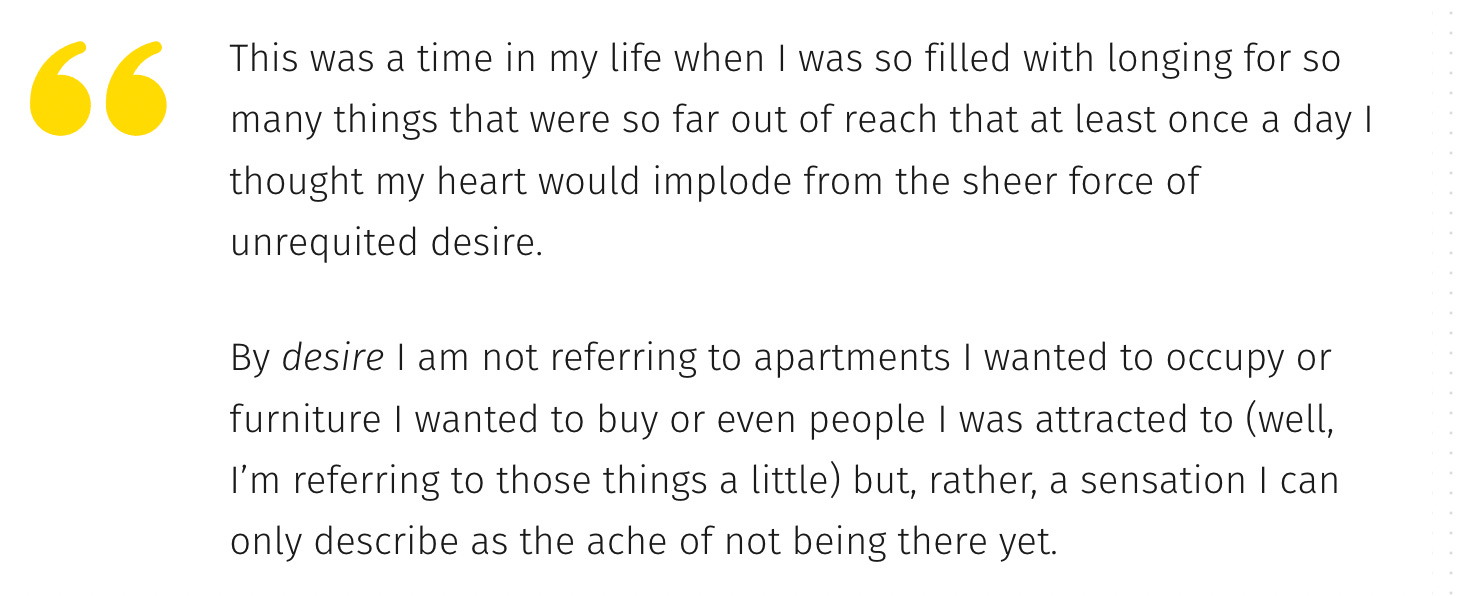
I do feel like my heart is always one wrong touch away from imploding. I’ve always been that way, though. This is one of the things that makes 7-year old me the same person as 23-year old me — “I over think. I over love. I over feel. I’m the sea or I’m nothing.” - Juansen Dizon
But I mean, physically speaking, 7-year old me and 23-year old me are not the same person. We are just temporary groups of atoms and molecules and those atoms and molecules were different 16 years ago, but somehow I am still SOPHIA??? WHAT?! What about me is actually persisting?
There is the body theory, which postulates that personal identity persists because we remain in the same body over time. But as I just said, fade that.
John Locke felt that our identity was more about our consciousness and he posited a memory theory: our personal identity persists over time because you retain memories of yourself at different points, and each of those memories is connected to the one before it. I like this one! More. Except if personal identity requires a memory, then we didn’t become who we are until our first memory. And if we accept this view, then is a person no longer that same person when they experience memory loss, like dementia?
Then there is also the Buddhist doctrine of non-self, anātman. This idea that there is no persisting self. All we are is a series of changes.
And in terms of this idea of saudade, well, the hippocampus, which is a brain structure classically associated with episodic memory, is also active when we imagine hypotheticals. Our brains use our previous experiences to construct possible futures. We are predictive creatures, so maybe it makes some sense that we can feel a loss for something we never even experienced.
The term nostalgia comes from combining the Greek words for ‘return home’ and ‘pain/ache.’ I think nostalgia fosters a sense of connection between our past, present, and future selves, allowing us to ‘come home’ to ourselves (whatever that means) again and again.
Not sure about any of this, and I feel myself getting sick, and I am tired, so I am going to crash land this plane. No real science today people — consider it a Mother’s Day gift, Shlarms.
Songs that feel relevant:
I feel like Piano Man is about all of the types of nostalgia…
Are your eyes brown, blue, or green?
I guess you could call me a luftmensch (Yiddish for ‘air person,’ a daydreamer):
How do I tell you that I’ve come to like the pain? How do I tell you that I don’t know what it means to be happy with somebody, don’t know anything about that. Who the hell can write a love song without making it too sad?
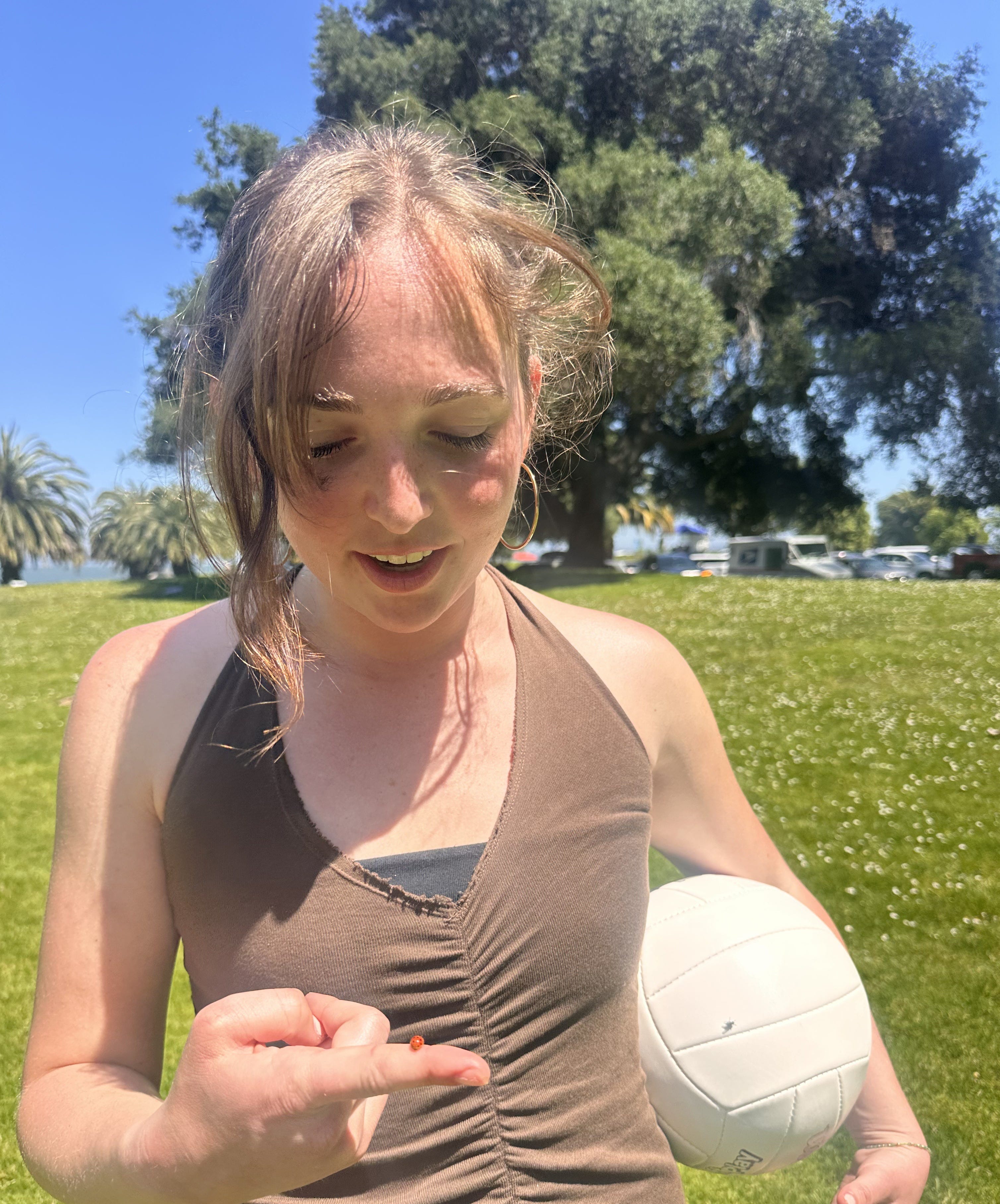
BTW, In another life I’m a librarian. In another another life I’m a teacher. In every life I’m covered in bruises from sports I take too seriously, and in every life I daydream.
Oh I love you so much Soph. In every life!