

Welcome to my Substack!

Hi friends! I am starting a substack hugely inspired by two of the coolest people I know: Lili Orchard and A Penny For Your Thoughts. I still don’t know what form this will take but it will hopefully always be somewhat science-y and reflective (or at least one of the two at any one point).
An ode to science and serendipity!
Something I find exquisite and poetic about science is the often serendipitous nature of discovery.
Many of the greatest scientific advancements were happy accidents. The prime example of this beautiful phenomenon is Penicillin – the very first antibiotic. In 1928, Alexander Fleming was studying staphylococci in his lab in Scotland. He took a few days for vacation and returned to find one petri dish had been left open. A green ring of mold had formed on the petri dish (Gross? No. Revolutionary!) Fleming noticed that beyond the mold was a halo-shaped clearing of the staphylococci that otherwise covered the plate. He had discovered a compound that could kill bacteria!
This random and accidental nature seems at odds with science as a practice. Science is rational and methodical. These two forces — randomness and rationality — seem opposed. Scientists conquer the unknown, clutching the scientific method tight to their chests and cradling their beloved hypotheses. So is this whimsical nature of science contradictory? I don’t think so. For me, it is very core to my attraction to this field.
One of the most important lessons my mentor from my lab at Duke taught me was how to think as a scientist. To think as a scientist, you must question everything. A failed experiment failed for a reason– it should not be disregarded; it should be understood. Failure is fuel and knowledge. If Alexander Fleming had simply seen the moldy petri dish, deemed it a failed staphylococci culture, and thrown it out, who knows how many years it would be until we had antibiotics! Failure can be one of the most valuable experiences if you are intentional. This is a teaching that transcends the lab and has absolutely changed the way I move through life.
Mini-lesson: Microbiology 101
“Discovery of a world as vast as outer space but as tiny that it’s invisible to [the] human eye - the world of microbes and bacteria and viruses” - this is not ideal for my first Substack post, but I wrote this quote down in my notes app a while ago and I cannot figure WHO SAID IT. I AM SORRY, SUBSTACK.
For my 8th birthday I was given one of the best gifts I have received to date: a simple single objective light microscope. I would sit on my bedroom floor for hours swapping out samples of grass and dirt while periodically calling my parents over to share the beauty. About 350 years prior, a Dutch fabric merchant, Antoni Van Leeuwenhoek was gazing through a far less sophisticated microscope and documenting for the very first time… MICROBES!


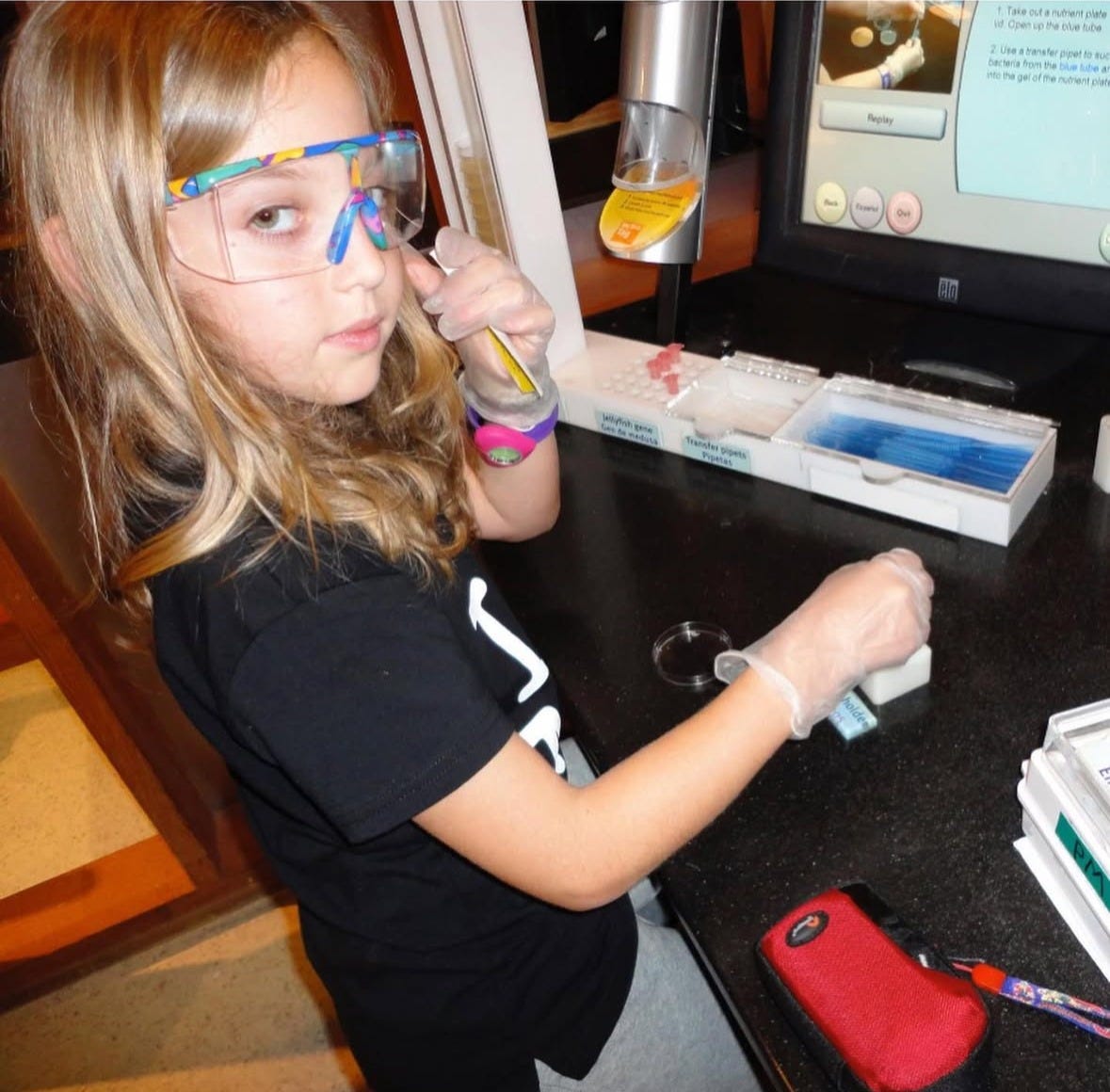
The definition of ‘microbe’ short for ‘microorganism’ is a living thing that is too small to be seen by the naked eye and therefore must be observed under a microscope.
Every living thing is made up of cells. Cells are the basic unit of life. Humans are made up of trillions of cells working together. We are brilliantly complex, microbes are brilliantly simple. Microbes are the simplest form of life. They are often made up of just one cell… and this one cell is enough to allow them to grow, reproduce, and survive! Microbes are everywhere – from deep ocean vents to humans’ guts. This ability to thrive in harsh and varying conditions allowed them to populate Earth billions of years before dinosaurs, humans, and even plants. Microbes have shaped every aspect of our planet’s history since their origin. They are incredibly diverse – in shape, in habitat, and in function. “Microbe” is an umbrella term for all of the tiny living organisms that we cannot see: bacteria, viruses, fungi, protozoa.
The microscopic size of a single microbe makes it hard to grasp the vastness of the world of microbes. To put the ‘world of microbes’ into perspective, here are some facts that absolutely stunned me when I first learned them:
The collective mass of microbes is greater than all of the animals on the entire planet.
There are MORE microbes in your body than stars in the Milky Way!
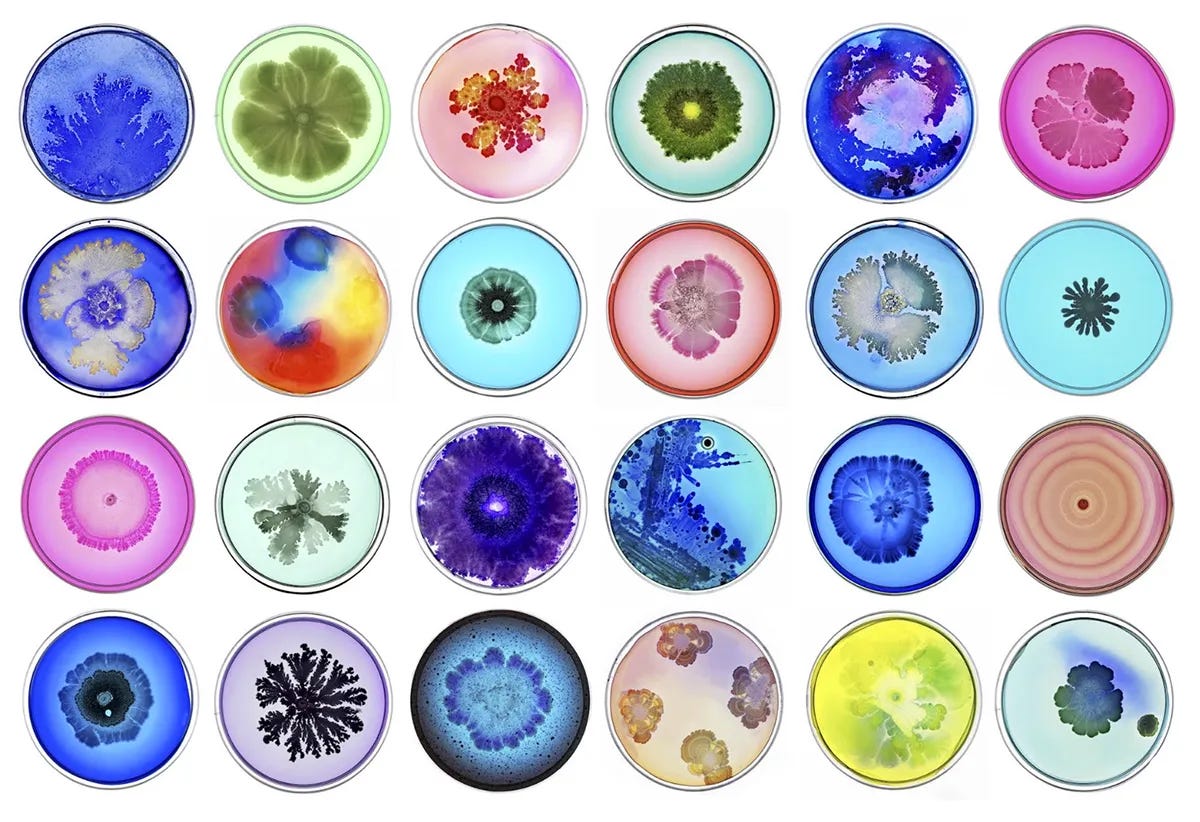
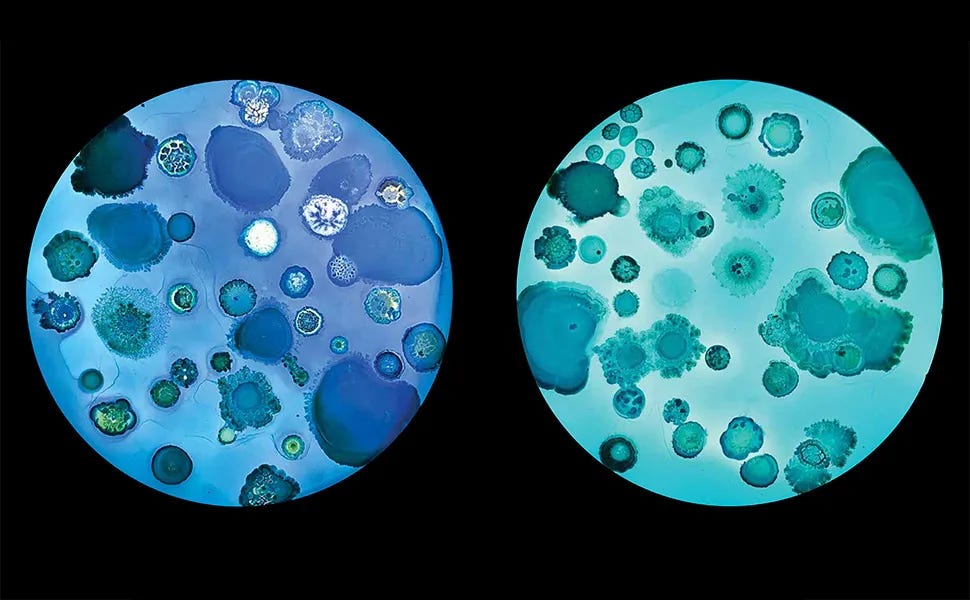
“Each living creature must be looked at as a microcosm — a little universe, formed of a host of self-propagating organisms, inconceivably minute and as numerous as the stars in heaven” - Darwin about us and microbes.
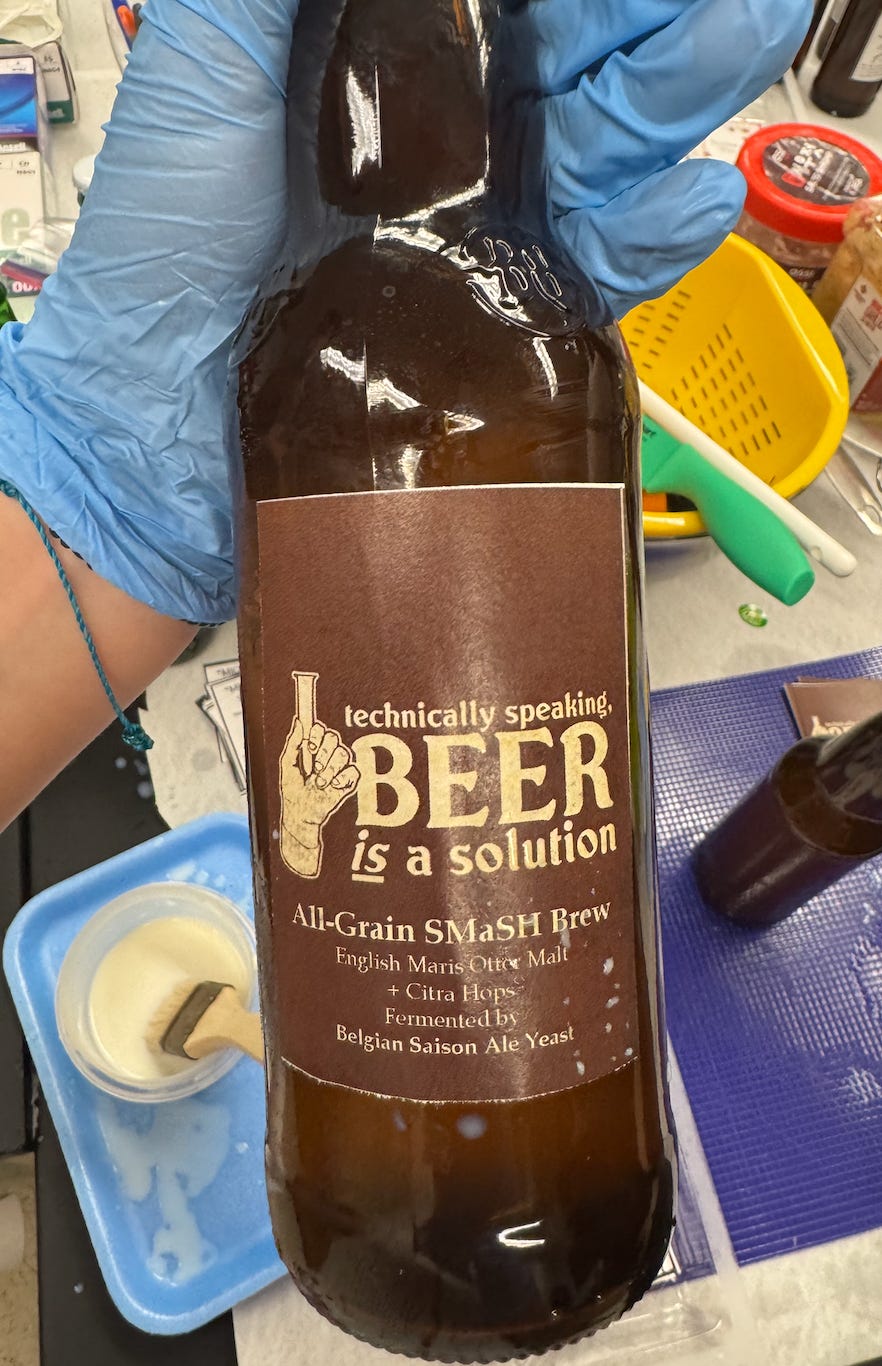
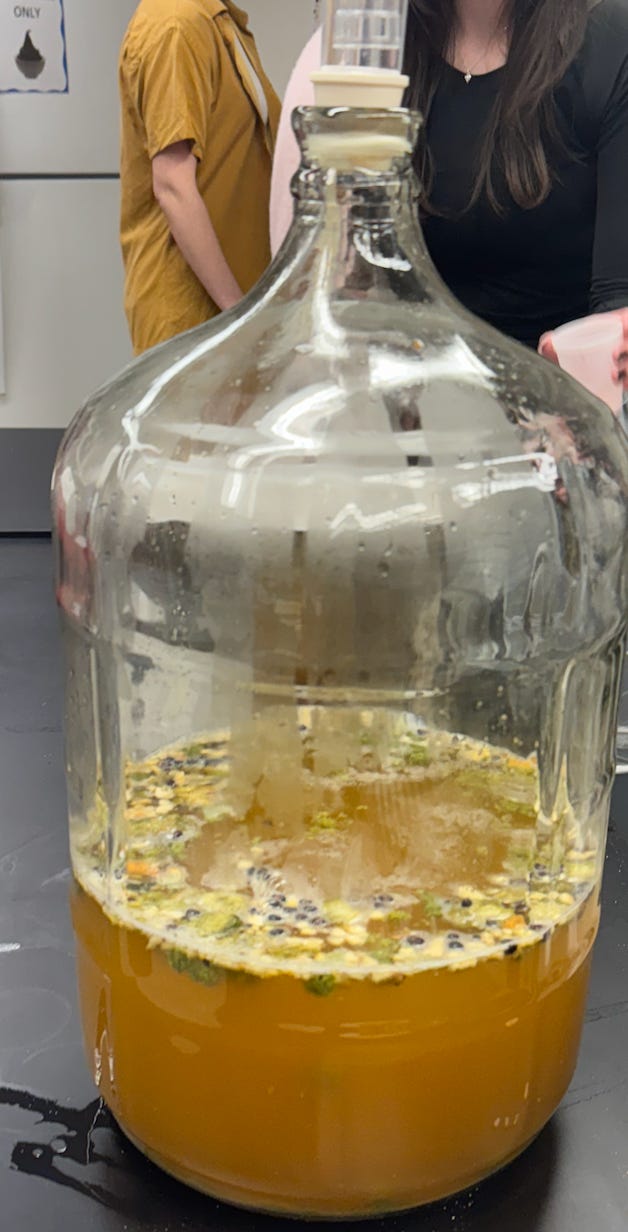
If those points didn’t sell you on the importance and awesomeness of studying microbiology, maybe this will: without microbes, there would be no alcohol (or kimchi or yogurt or bread or cheese!) I could write a whole post on this process, but for now, here are some photos from my microbiology beer lab:
Microbe Spotlight: Thermus aquaticus
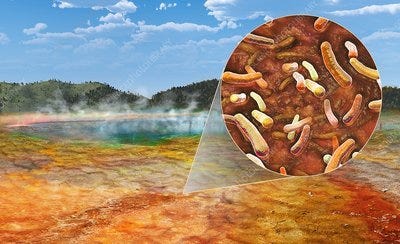
Thermus aquaticus (T. aquaticus) is a thermophilic bacteria, meaning it loves heat. It was discovered in hot springs in Yellowstone in the 1960s. Its optimal temperature for growth is 158 - 167°F. The discovery of this heat loving bacteria revolutionized one of the most widely used methods in scientific research: Polymerase Chain Reaction (PCR). PCR allows researchers to amplify (copy over and over) a segment of DNA. Before T. aquaticus, new DNA polymerase enzymes needed to be added for each cycle of PCR because the high temperatures necessary for certain steps would denature (destroy) the enzyme. The T. Aquaticus bacteria produces an enzyme called Taq polymerase which is able to copy DNA just like DNA polymerase but can survive the high temperatures. The discovery and subsequent utilization of the T. aquaticus bacteria changed the field of molecular biology forever.
Thank you and Goodbye!
Thank you to any of the champs who made it this far! My next post will be about the gut microbiome… hopefully soon! <3
This was great Soph. Need more microbe content stat‼️
You ARE equally handsome and equally smart!!!