You're ALL superheroes!
Your superpower is finding the brains I show you beautiful.

How to like poetry
I just read an essay on Substack, How to Like Poetry. I already really like poetry, but I was curious.
I know a lot of people find poetry boring, confusing, or frustrating. That is fair. Rather than a correct answer, poems lead to more questions, which is stressful in our reading comprehension wired brains. I was a pretty type-A-goody-two-shoes student when I was younger. So much so that I left school in 1st grade with a ‘stomachache’ because I didn’t know the answer to a question my teacher was asking. I couldn’t handle not knowing.
I don’t think I’d like poetry if it weren’t for my 7th-grade English teacher, Mr. Bolja. He came into class wearing a raven mask and recited Edgar Allen Poe’s ‘The Raven.’ It was glorious. At least I felt that way, and proceeded to memorize the poem and challenge Mr. Bolja to Raven-off’s through high school.
I imagine this is where I lose people. What is glorious about an eerie poem about grief written by a weirdo who has been dead forever?
It’s all in how you look at it. This is an example from the essay I mentioned. There are three ways to look at the Grand Canyon. You are being chased by a cougar, in which case you wouldn’t notice it. You are a mining executive, and see it not as an object of beauty but as something that could be used. You are a tourist who has seen dozens of photos and paintings and finally get to see it for yourself.
“The point is: to perceive beauty, you have to pay attention in a particular way, even if the thing you are looking at is pretty much indisputably beautiful” - Isaac Kolding. I LOVE THIS. And I learned this from Mr. Bolja during our poetry unit.
What is boring on first read might just be glorious if you sit with it a bit longer. And that extends beyond poetry.
“Every moment is a poem if you hold it right.” - Lauren Zuniga
Our experience of beauty or meaning is something we create. It arises when we render something worthy of attention and allow it to move us. The ability to find beauty or interest in a poem, person, or picture is a wonderful thing. And to be able to find beauty in things that other people don’t is a freaking superpower!!!
For the science segment, I am actually going to show some of my experiments from my Duke lab. A lot of research is hard-to-interpret graphs, but a lot of it is also quite beautiful. I’m going to show some that I find beautiful, you guys probably will too, since you’re all superheroes!!!
Andy Warhol walked so I could run
This is my experiment!! Well, really, this is art I made out of images I took. LOL. Cool right!?!?!?! I shall explain!
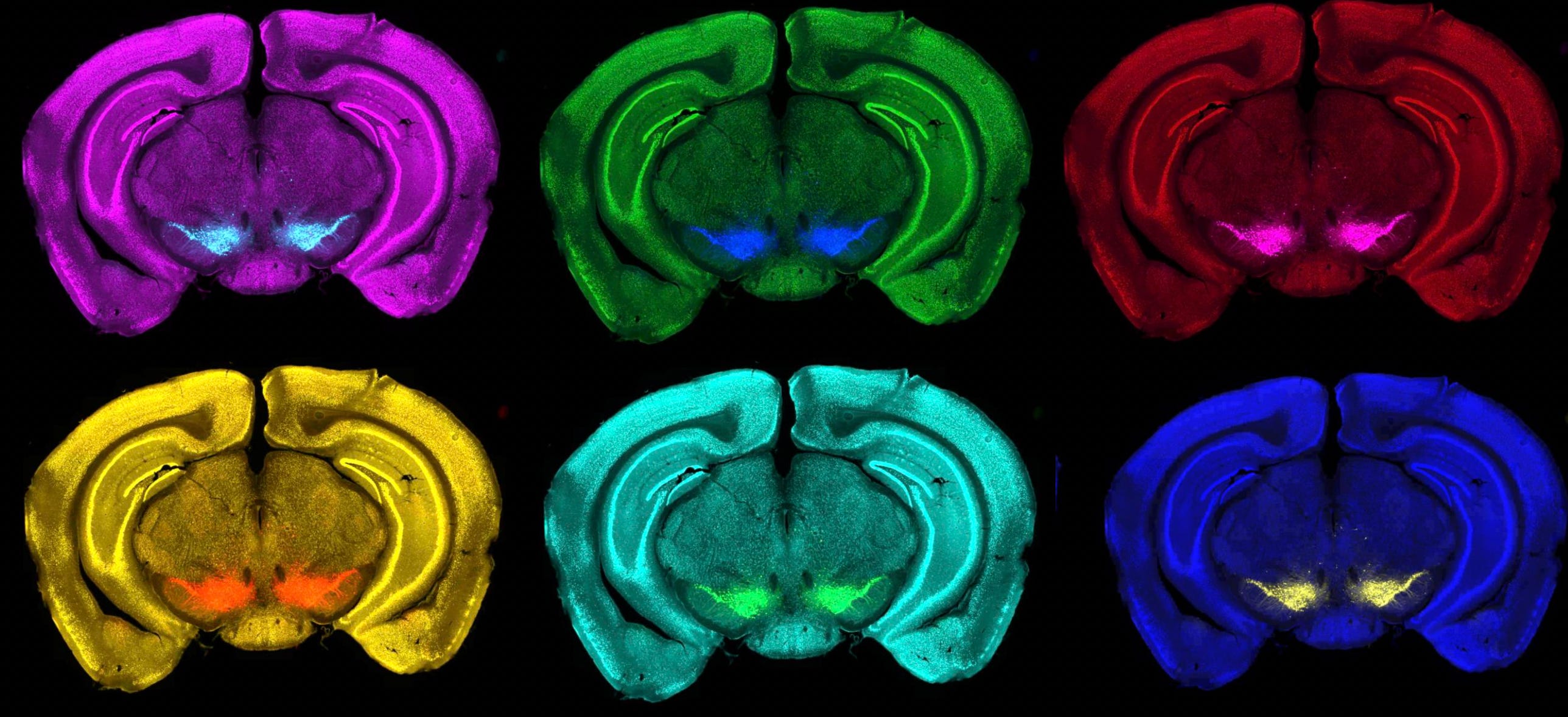
Each of those is a section of a mouse brain that is 40 microns in thickness. That is around the thickness of one strand of your hair. Actually, each of the different colored brains is the same section, I just played around with the colors on the analysis software I used.
Step 1 (ish) of this experiment was to cut each mouse brain into these 40 micron sections using a microtome, kind of like a deli meat slicer.
Step 2 is to pick out the sections you are interested in looking at. In this case, I wanted to look at the substantia nigra (SN). The SN is a region in the midbrain that is densely packed with dopamine neurons. It sends its dopamine (projects) to the striatum, a region of the brain that controls motor movement. The hallmark of Parkinson’s Disease is the death of dopamine neurons in the SN, resulting in the depletion of dopamine in the striatum, which drives the motor symptoms. For this experiment, I was trying to see this dopamine neuron death (called dopaminergic degeneration) in a mouse model with a genetic mutation linked to Parkinson’s. The SN dopamine neurons are the ones in a different color on each section.
Step 3 was to do immunohistochemistry (IHC). IHC is a very common experiment that allows us to visualize and then quantify different proteins that would otherwise be invisible. This works by adding a primary antibody that binds to the thing you’re interested in, and then adding a secondary antibody that binds to that primary antibody and releases fluorescent signal, which we can visualize. In that image, I wanted to be able to visualize two things: dopamine neurons and all neurons. To look at dopamine neurons, I used a primary antibody that binds to an enzyme (protein with catalytic ability) that converts Tyrosine to L-DOPA, which then gets converted to Dopamine. To look at all neurons, I used another primary antibody that binds to a protein found in the nucleus of neurons. Then I used a secondary antibody for each of the primary antibodies that fluoresces at different wavelengths of light.
Step 4 is to hit these antibody-tagged sections with light of these different wavelengths (excite the flourophores) and take images that capture the fluorescense. This means I can see dopamine neurons AND all neurons, and also distinguish them from each other.
Step 5 is to upload them to a cool software that allows you to quantify the number of dopamine neurons and total neurons. Traditionally, you’d have to count this yourself. But I used a dope AI-based software where you train a model to recognize each cell type, and then it counts for you ;-) Thanks, AI… you a dawg fr. A fun bonus of the software is that you can change the colors, so naturally, I had a field day… and created that ‘art!’
But really, I guess I shouldn’t have the quotations around art because my whole point is that this is art if you pay attention and perceive it as beautiful. But really really, these posts never exactly have a point… I am just writing for fun and to learn something and share it with y’all.
Beauty in plant biology
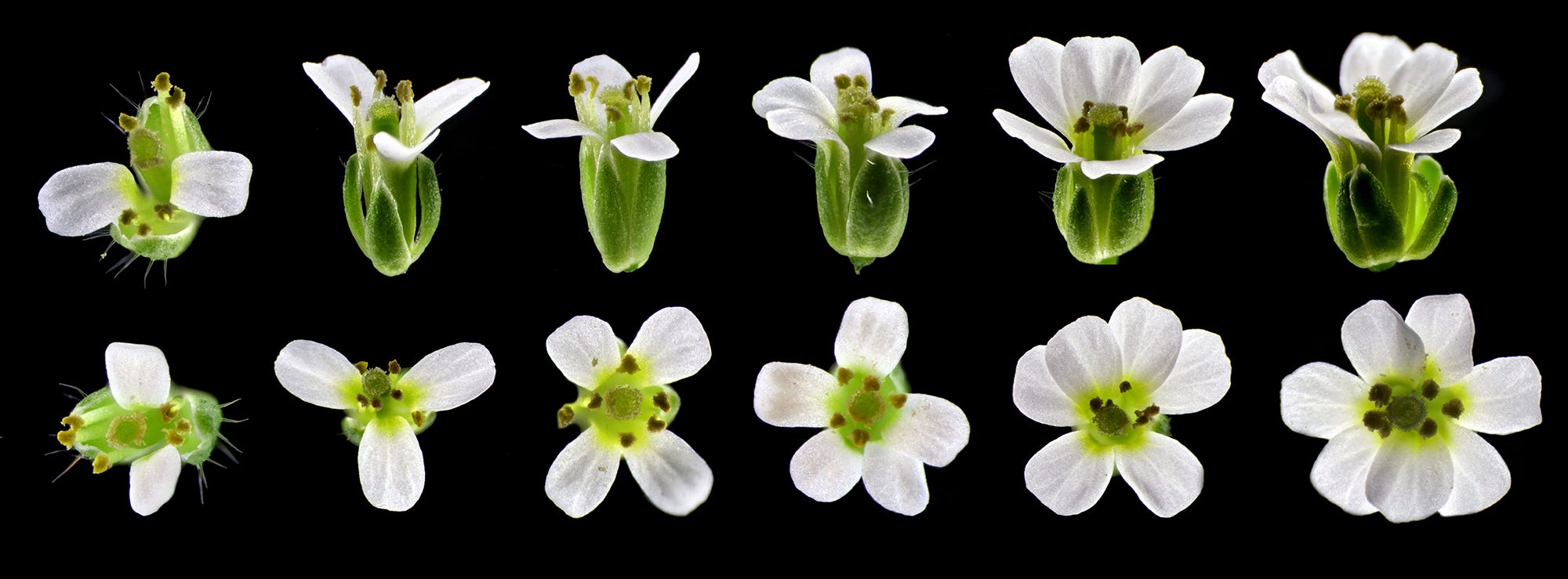
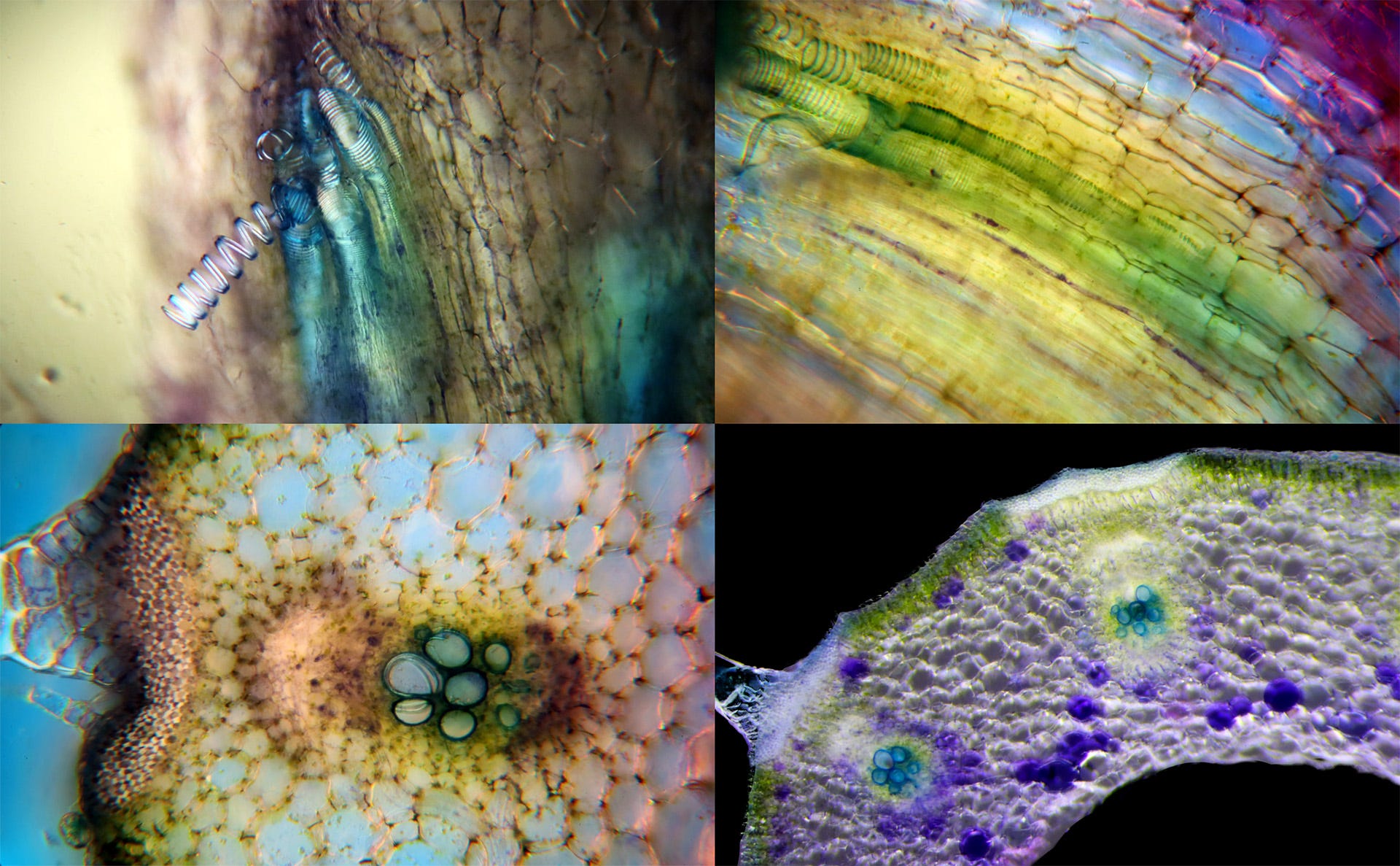
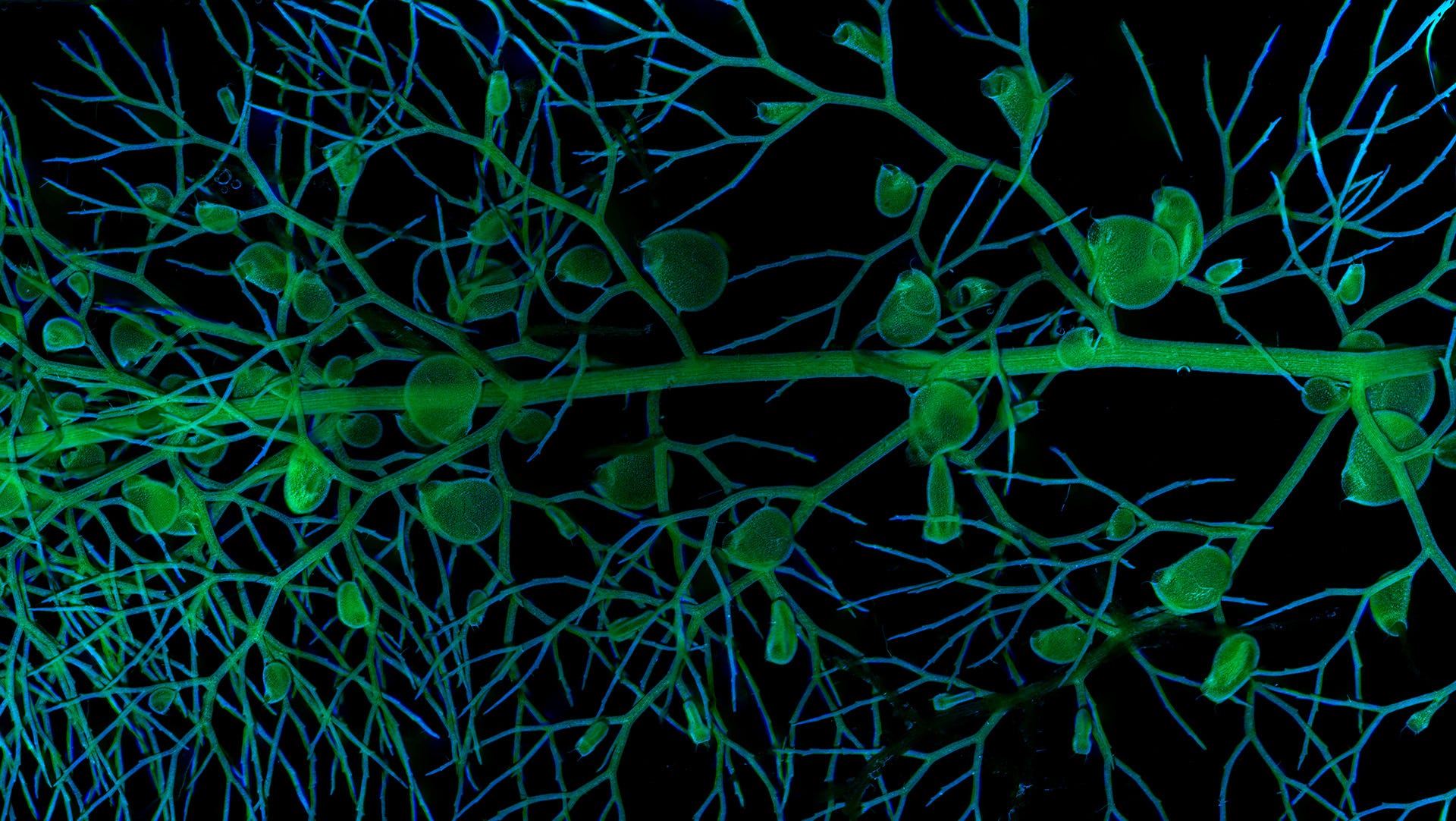
I am signing off with a gallery of art from this postdoctoral scientist in the UK studying plant biology, Nick Desnoyer. His side quest is to take photographs and timelapses of his plants and share this fusion of art and science with the world.
This is a link to his website.